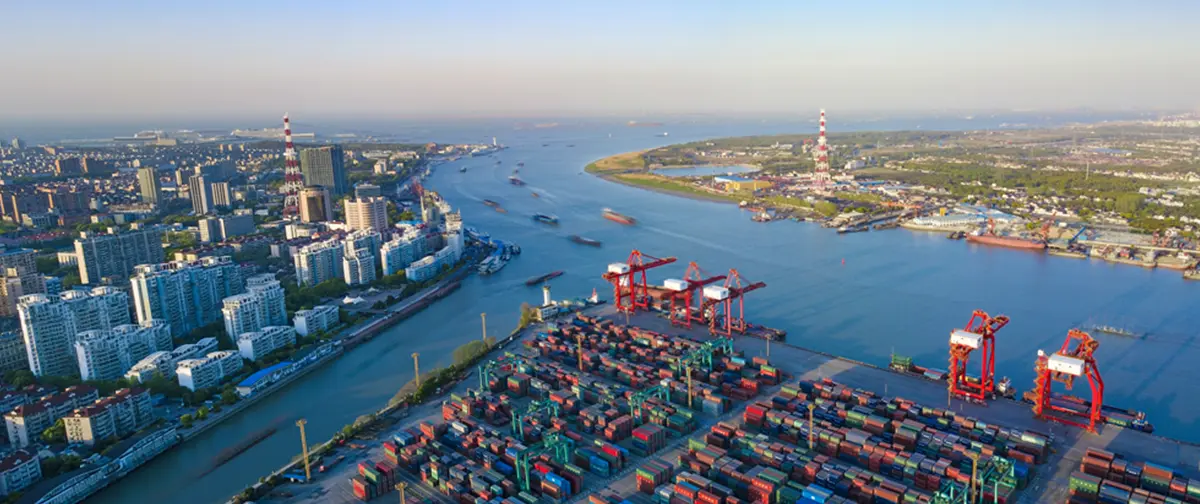
Typhoon Bavi has caused significant disruption across major East Asian ports, creating widespread impacts on regional and global supply chains, particularly affecting cargo moving to and from India.
Key Developments
- Delays at the ports of Shanghai, Ningbo, and Singapore are affecting vessel arrivals at India’s key gateways, including Nhava Sheva and Mundra. As a result, export schedules from India are being disrupted, making it increasingly difficult for exporters to meet delivery commitments.
- Shortage of empty containers – Reduced port operations in China have slowed the return of empty containers to India, creating equipment shortages and increased competition for available containers at Indian export ports.
- Congestion spreading to Ningbo-Zhoushan – As shipping lines divert vessels from Shanghai to Ningbo-Zhoushan, congestion has intensified, resulting in longer waiting times that now exceed earlier forecasts.
- Growing congestion in Singapore – Already operating under heavy pressure, the Port of Singapore is expected to experience unprecedented congestion as hundreds of delayed vessels from North Asia arrive for transshipment operations.
- Peak season demand accelerating – The combined impact of the typhoon and the traditional build-up toward the year-end holiday season in the U.S. and Europe is driving a sharp increase in demand for shipping capacity.
- Freight rates continue to rise – In addition to Peak Season Surcharges (PSS) and Emergency Situation Surcharges (ESS), shipping lines have begun introducing Port Congestion Surcharges for vessels calling at ports in China and Singapore, contributing to further increases in Asia trade lane freight rates.
Our Recommendations
To minimize potential disruptions, we recommend:
- Booking shipments 4 – 6 weeks in advance whenever possible.
- Consider alternative South China ports, such as Shenzhen and Yantian, which have experienced less disruption than other major gateways.
At ICL Global, our teams remain in close contact with shipping lines, carriers, and partners worldwide to monitor developments and provide customers with the most effective logistics solutions.
We will continue to share updates as the situation evolves.
For further information, shipment planning, or alternative routing solutions, please contact your local ICL Global representative.
ICL Global
The information in this ICL Global Update Center is provided for general informational purposes only and does not constitute professional advice. While efforts are made to ensure accuracy and timeliness, the content may contain third-party information or links that are beyond our control and may change without notice. We make no warranties regarding completeness, reliability, or suitability. Readers should verify all information independently before taking any business, financial, or operational action.